Excellent - 3rd Bombay Regiment

3rd Bombay Regiment - The Steel Heads

3rd Bombay Regiment - Those of you who know something about the history of the Beauchamp Lodge will recall that its founding Brethren came predominantly from the Royal Engineers and 109th Regiment of Foot, both of whom were stationed at Roorkee in 1872. The military reputation of the Royal Engineers, or ‘Sappers’, is well known; but that of the 109th Regiment of Foot, called the ‘Steel-Heads’ or ‘Brass-Heads’, is less well known. The 109th nicknames arose from their renowned ability to withstand the hot sun of Central India; this was due to them having been possibly the first regiment to experiment with the wearing of lightweight cotton ‘khaki’ battle uniforms, instead of the traditional heavy brightly coloured uniforms.
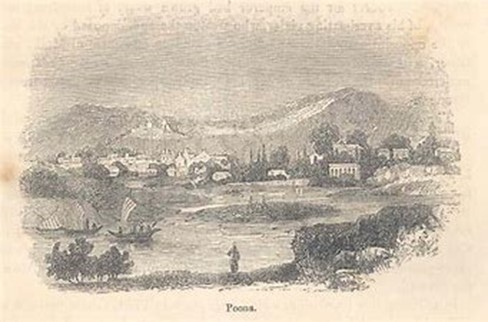
The 109th Regiment had a short but very distinguished history. It was raised in 1853 at Poona (now known as Pune) by the Honourable East India Company; using volunteers from the 1st Bombay Fusiliers and the 2nd Bombay Light Infantry, supplemented with some recently arrived recruits from the Company’s depot at Warley near Brentwood in Essex. Originally they were called the 3rd Bombay (European) Regiment; nearly all its members were non-Indians, so the Regiment remained loyal during the Indian rebellion of 1857-1859.

In 1858 the British Crown would take the control of India away from the East India Company, and the regiment then came under the control of the British Government, but was still known as the 3rd Bombay Regiment. However, in 1862 it was formally transferred into the British Indian Army, and the 3rd Bombay Regiment became the 109th Regiment of Foot (Bombay Infantry).
In 1859 the regiment’s numbers were boosted by the transfer in of about 500 men from the Jäger Corps, who had just arrived from South Africa. Originally known as the British German Legion they were mostly German volunteers who had fought for Britain in the Crimean War and then been resettled in South Africa, but on the outbreak of the Indian Rebellion many volunteered for service in India.
The 3rd Bombay Regiment saw most of its active service in the Indian Rebellion 1857-59; when as part of the 2nd Brigade of the Central India Field Force it fought with distinction at Baroda, Saugar, Rahatgarh, Gwalior, and Jhansi. The 3rd Bombay Regiment was stationed in Aden between 1864 and 1866, and took part in two expeditions against Sultan Abdallah in Tunisia. The 3rd Bombay Regiment then returned to India before embarking for England in 1877; while the 3rd Bombay Regiment was stationed at Aldershot in July 1881 they were, as part of the army reforms, amalgamated with the 100th Regiment to form The Prince of Wales’s Leinster Regiment (Royal Canadians).

In 1872 when the 109th Regiment was stationed at Roorkee six of its members were amongst the founding Brethren of the Beauchamp Lodge. One of them was called Oscar Schmidt, a name that would suggest he had been a member of the Jäger Corps. I did come across a photograph of the officers of the 109th Regiment taken in 1870, one of whom was a Colonel Schmidt (circled in the picture) but sadly he is not our Lodge’s Oscar Schmidt.

Let’s now look more closely at just one of the military actions where the 109th Regiment played a key role. During the Indian Rebellion they took part in the assault and recapture of the rebel held fortress of Jhansi in Central India.
The assault began with an attack by the British forces in the early hours of the morning of the 3rd April 1958; the fighting was fierce and would continue into the streets of the city, the 86th Regiment were the first to breach the fortress walls and they won four Victoria Crosses in this action. The attack succeeded, and the next day as darkness fell the rebel leader Rani (Queen) Lakshmibai fled the city with her adopted son. It is believed that some of her troops and gunners at Jhansi were women; the Rani would herself later take part in a cavalry action near Gwalior where she died from her wounds.
It was at Jhansi on the 3rd April 1858 that Bugler Private Frederick Humphrey Whirlpool (1831-1899) of the 3rd Bombay Regiment (European) won a Victoria Cross for gallantry. His birth name was actually Humphrey James, but on joining the army he adopted the name Frederick Whirlpool; he later said that whirlpool was a term his father had used to characterise his son’s volatile temper, it was after one such a quarrel that Frederick had joined the army.

During the assault on the fortress walls Private Whirlpool had twice volunteered to retrieve wounded comrades, despite coming under heavy enemy fire. The citation also made reference to Whirlpool’s devoted bravery during the assault on Lohari on the 2nd May 1858, when he rushed to the rescue of Lieutenant Donne who had been seriously wounded. In doing so Whirlpool himself received seventeen separate wounds, one of which nearly severed his head from his body; it is reputed that as he was carried away to receive medical attention Whirlpool called out ‘Take care lads! Don’t shake my head or else it will come off!'
Against expectations Whirlpool survived his wounds, but he never fully recovered from them and was medically discharged. In 1859 he immigrated to Australia, where he would try to keep his Victoria Cross a secret; in fact he never wore the medal again after the day he received it. He died in 1899 and was buried in an unmarked grave at Windsor in New South Wales, with just one mourner in attendance; there are now plans for a suitable memorial to be erected.

This 3rd Bombay Regiment post has been created by the West Kent Military lodge for information. If you would like to now more about the Lodge contact us here

If you’d like to know more about us or how to join our Military Lodge simply click the contact us link and message us your details. We will be very happy to answer any enquiries you may have.

Twitter Feed


