
Inspiring Clayton Scudamore Beauchamp

Clayton Scudamore Beauchamp - Glimpses of our founder’s life
Clayton Scudamore Beauchamp, after whom our lodge is named, was born on the 24th April 1842 at Sholopore (Solapur) in India. As a teenager he travelled to England to attend the Military College founded at Addiscombe in Surrey by the East India Company. In a picture of that college, taken some time around 1859, Beauchamp could well be one of the gentlemen cadets shown posing in front of the building. A newspaper report of the time suggests that the students were not always very attentive to their studies, but not so Cadet Clayton Scudamore Beauchamp as in 1860 he won the college prize for geology.
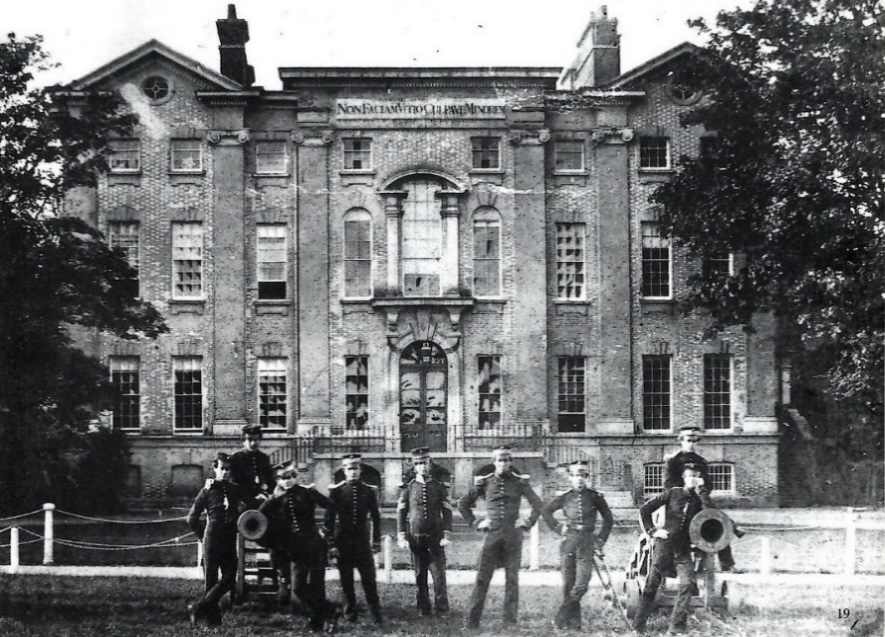

When he was 19 years old Clayton Scudamore Beauchamp joined the Royal Engineers, who were based at Chatham in Kent.

In early 1864 he was serving with them in Corfu; the British protectorate of that island was coming to an end and Beauchamp was helping to blow up the vacated military forts. In May 1864 he returned to Chatham, and in September that year he married his wife Ellen in London at St. John’s Church, Holloway.

In 1866 whilst they were both living in India they had a son, whom they named Clayton Gascogne Beauchamp; he lived until 1953, dying at Pembury near Tunbridge Wells.
Clayton Scudamore Beauchamp, now a Lieutenant, had been posted to India shortly after his marriage; in 1865 he joined the Indian Public Works Department and was posted to Goruckpoor (Gorakhpur) as the District Engineer. His duties included the maintenance of roads, bridges, and public buildings; and he was also involved with famine relief works following the terrible Orissa Famine of 1866, such works provided employment for many thousands of Indians.
In 1870 Clayton Scudamore Beauchamp joined the staff at the Thomason Engineering College in Roorkee as an Assistant Principal. Two years later he was made personal Assistant to the Chief Engineer; a role he filled most capably, being promoted to Captain and made a Government Under-Secretary. In the early part of 1881 he would return to England for a short while, possibly to be with his wife who was to die there in 1883 from liver disease aged 40. In December 1881 Clayton Scudamore Beauchamp was promoted to Major, and in 1882 he returned to India to work with the Indian Railways Board.
His Brethren, friends, and colleagues described Clayton Scudamore Beauchamp as a ‘most genial companion and valuable friend’. He was also highly regarded professionally; in 1876 he was elected an Associate of the Institute of Civil Engineers, and in 1883 he patented a fire protection system for theatres. The surviving records also show that Clayton Scudamore Beauchamp was a man of strong convictions; and he became a well-known figure in India, due to the long articles he wrote for the ‘Pioneer’, a leading Indian newspaper. The views he expressed did sometimes bring him into conflict with his superior officers, and as a consequence he did have to give up his Government Under-Secretary post.
In 1884 after 20 years of Indian military service Clayton Scudamore Beauchamp finally left India for Britain. Initially he was stationed in Glasgow, but in May 1885 after a period of sick leave he was posted to the Royal Engineers Depot at Chatham, where he remained until his retirement from the army in July 1886 with the honorary rank of Lt. Colonel.

Sadly Clayton Scudamore Beauchamp was to die in poverty at Hastings (26 Wellington Square, Hastings TN34 1PN) on the 24th February 1889, when just 46 years old. The reported cause of death was Bright’s Disease; but he could also have had alcohol related problems.
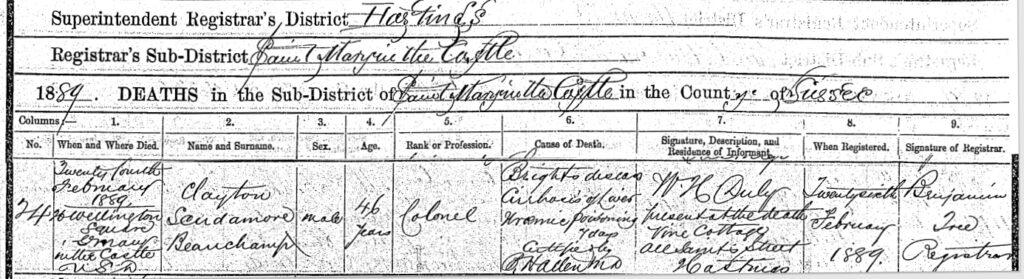
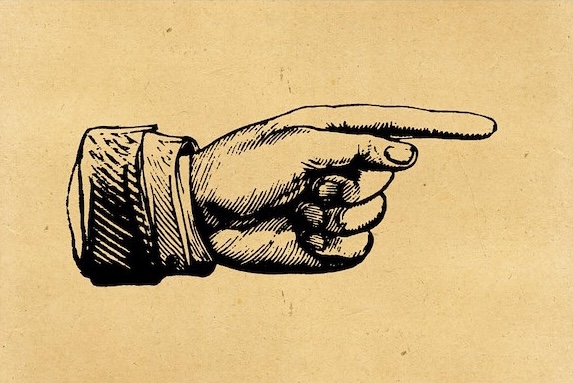
This is only conjecture, but we know that heavy drinking was not uncommon amongst British officers in India, especially those stationed at depots; and there was a story told in the Beauchamp Lodge about Clayton Scudamore Beauchamp having a series of ‘pointing hands’ painted on the walls of his bungalow in Roorkee, to guide him to bed should he arrive home late having had one drink too many at the lodge, the last arrow pointing directly at his bed.
As to his Masonic career in India we know that Clayton Scudamore Beauchamp was Initiated in January 1870 at the Lodge of Hope No.413 in Meerut. Although a fairly new Brother he would be the driving force behind the formation of the Beauchamp Lodge at Roorkee in April 1872; he also played prominent roles in the forming of a Mark Lodge and Knights of Constantine Conclave at Roorkee.
Clayton Scudamore Beauchamp had noted the many Freemasons in the ranks of the military units based in, or passing through Roorkee; but the nearest permanent meeting place for them to gather together was over 30 miles away. Clearly a Masonic venue was needed in Roorkee itself; and Beauchamp enthusiastically set about making it a reality. Indeed of the lodge’s 23 founding members eleven came from the Royal Engineers, and six from the 109th Regiment of Foot who were at the time stationed in Roorkee.
Despite the leading role he had played in the formation of the lodge he could not be its primus Master, as he had not been a Past Warden, instead he was its first Senior Warden. The first Master would in fact only attend the lodge’s first three meetings, and on the 21st December 1872 Clayton Scudamore Beauchamp became the Lodge’s second Master. At the next meeting in January 1873 he gave an explanation of the 1st Degree Tracing Board, so he was clearly a very good ritualist.
Clayton Scudamore Beauchamp’s military duties did require him to move around India; and in January 1877, after a three year absence, he made his last visit to Beauchamp Lodge. It was a special emergency meeting called to give Brethren the opportunity to entertain and celebrate their founder; to mark the occasion he bought a share in the Roorkee Masonic Hall which he presented to the Lodge as a parting gift.
Twelve years later the lodge would receive a letter from Major-General Irving-Graham, telling them that Brother Clayton Scudamore Beauchamp was on his death bed and in financial distress; the letter was read out in open lodge and a significant sum was pledged to assist him; but sadly unbeknownst to them he had already passed away three weeks earlier.
When researching family histories you tend to find more clues than conclusions; but I do hope that this brief outline of his life has given you a clearer view of Clayton Scudamore Beauchamp the man. Although regrettably not an actual picture; we know that a framed photograph of him did hang in the lodge’s meeting place at Fort William in Calcutta, but it was lost when the lodge moved here to Wilmington.

This post has been created by the West Kent Military lodge for information. If you would like to now more about the Lodge contact us here

If you’d like to know more about us or how to join our Military Lodge simply click the contact us link and message us your details. We will be very happy to answer any enquiries you may have.

Twitter Feed


