
Awesome - Next slide please

Slide show
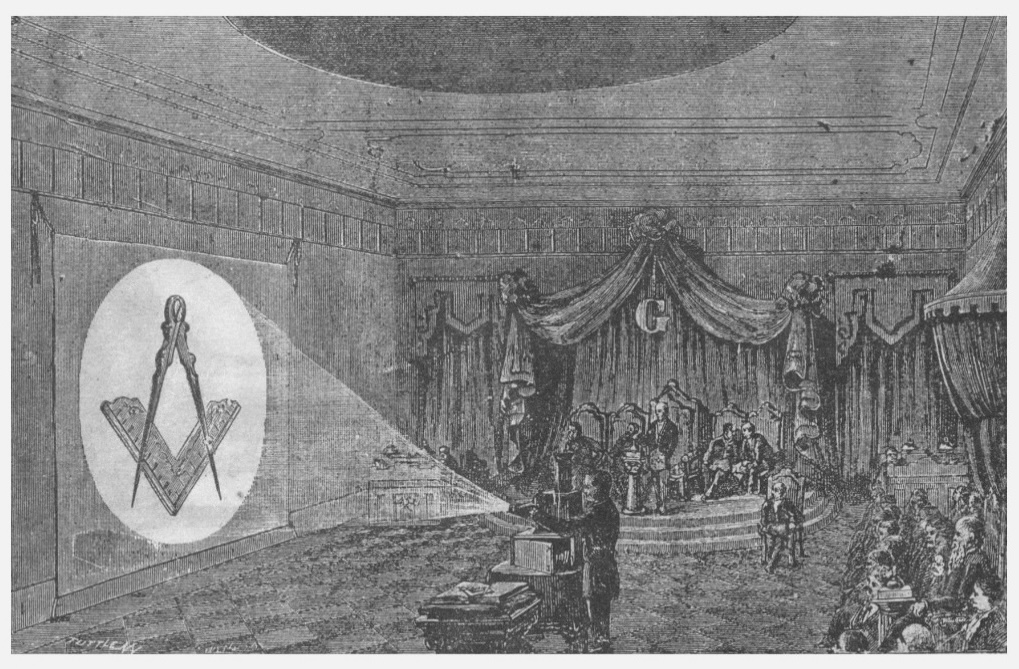
Slide show - In today’s world of digital technology, it is not unusual for lectures to be delivered in Lodge Rooms using computer driven PowerPoint slides. Prior to this electric slide projectors were sometimes used, many of us will remember the heckling when a slide was put in upside down but there is also evidence for the use of a much earlier form of visual aid technology in our lodges, the ‘Magic Lantern’ slide projector.
The use in English lodges of slides with a Masonic ritual content has yet to be fully researched, but there is a great be deal of evidence for their use in American lodges of the late 19th century, indeed the catalogues of American Masonic suppliers offered a wide range of such slides. In England I have found only a few references to them in some old lodge records; in 1849 the Beaufort Lodge No.103 in Bristol mentioned a 2nd degree slide and an inventory prepared in 1844 for the Domatic Chapter No.177 lists ‘transparency’
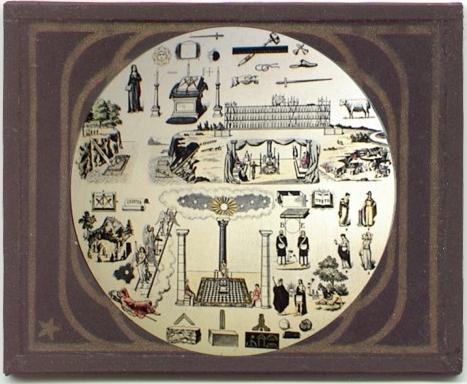
Magic Lantern slides were certainly used by English lodges to give non-Masonic lectures, but was the same range of Masonic slides available to them as to American Freemasons? Looking at the American slides many depict the narratives of the Degree rituals; but there are also chart like slides that show the symbols of each Degree, and these are very similar to the printed Masonic wallcharts we can still see hanging in the robing rooms and corridors of our older Masonic Centre.
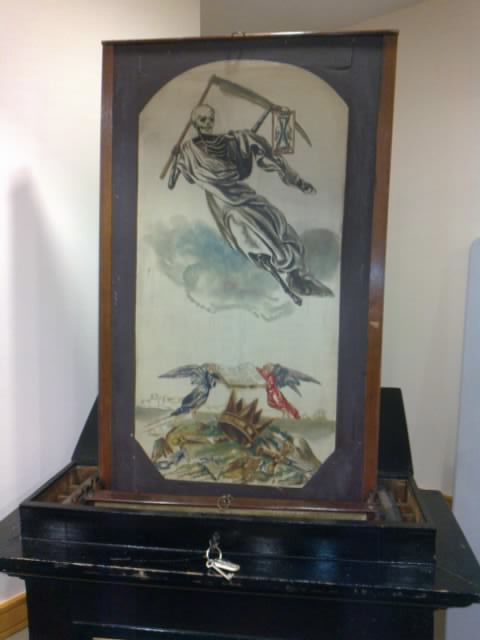
Images might not only be projected in lodge rooms; sometimes painted translucent panels would be illuminated from behind by lamps or candles; a practice still seen in some other orders. The Craft images depicted usually related to the 3rd Degree, and their impact would have been quite awe inspiring for candidates.
(Photograph courtesy of Lodge)
The 1792 accounts for the Lodge of Relief No.42 in Bury record such an image being ‘painted and regilded’ on a 30" square linen panel, which for the 3rd Degree was hung in a wooden frame behind the Master’s chair. The panel was lit from behind; at its centre was a ‘zodiac’, an image with no Masonic significance, but above it were two female figures representing Relief and Hope, with an All Seeing Eye set between them, and at the bottom were depicted various working tools.
The Lodge of Faith No.141 in London still use an unusual early 19th century fourth tracing board; it depicts emblems of mortality, and is designed to be lit from behind. The September 1840 minutes for the Prince Edwin Lodge No.128 in Bury record them ordering ‘two new transparencies’, one for the East and one for the West, and later that year they paid Bro. E. Murray £2 10s. for ‘painting them’, we do not know what he painted.
(Denbigh Masonic Hall)
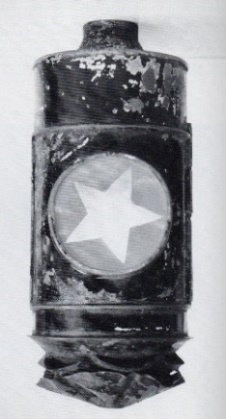
To represent the ‘bright morning star’ lanterns were sometimes fitted with glass transparencies depicting a five pointed star; an 1844 circular from George Claret, a Masonic equipment supplier, advertised ‘Japanned Lanterns with Star, Lamp and Reflector for the 3rd Degree’; many lodge rooms today still have a small spotlight installed for the same purpose.
When looking at old lodge records you do find references to ‘lanterns’ and ‘stars’, although the lanterns may sometimes have been just the ordinary outdoor lanterns that some lodges would have purchased for their Tyler, together with a warm outdoor coat and hat. It was then often part of the Tyler’s duties to deliver summonses, they might also be required to take part in public processions, or escort Brethren home through the sometimes dangerous streets. Some rural lodges would set their meeting dates to align with a full moon, so that it would be light for Brethren going home; in 1967 there were still 29 such ‘moonlight’ lodges in England and Wales.
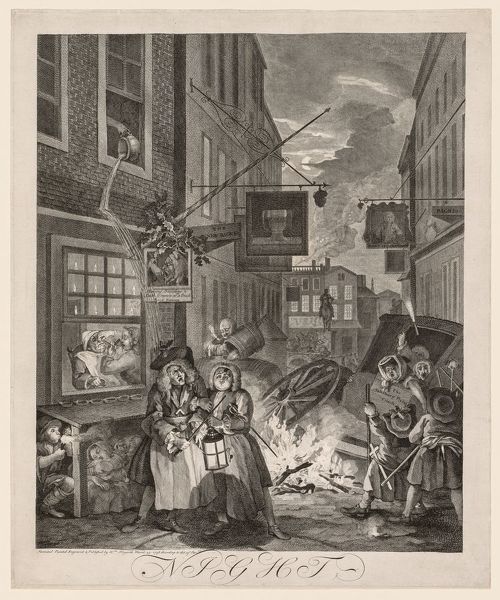
(A Tyler Escorting the Master Home)

I hope that this brief look at Masonic slides and lanterns has given you an insight into an often overlooked aspect of Freemasonry, and that you may now be tempted yourself to look for more evidence about the role they once played in our lodges.
This post has been created by the West Kent Military lodge for information. If you would like to now more about the Lodge contact us here

If you’d like to know more about us or how to join our Military Lodge simply click the contact us link and message us your details. We will be very happy to answer any enquiries you may have.

Twitter Feed


