
Captivating - Swords in Freemasonry

Why Swords in Freemasonry?
Swords in Freemasonry - Swords were still being used as weapons in conflicts well into the 20th century; but there is also a long and ongoing history of their symbolic use, not just to represent war and battle but also justice, honour, and power. The New Testament Book of Ephesians 6:17 says ‘Take the helmet of salvation, and the sword of the spirit, which is the word of God’. Monarchs still use swords to confer honours, solemn oaths are still taken upon them, and the figure of Lady Justice atop the Old Bailey Law Courts in London holds a sword in her right hand.

Swords in Freemasonry continued - Until the late 18th century swords were an every day item of dress for gentlemen, so most Freemasons would have been accustomed to wearing them.
However, except for the Tyler most lodges required Brethren to leave their swords outside the lodge room; we know that in the late 18th century swords were banned from the Festivals of the Moderns Grand Lodge, and in 1767 their Lodge of Friendship No.6 had to seek a special dispensation to wear them in lodge.
The ban may have been intended to discourage the fighting of duels; there are no records of any sword fights having taken place in lodge rooms, but we do know from the 1783 minutes of the Albion Lodge No.9, under the rival Ancients Grand Lodge, that a visitor who had been fined for swearing challenged their Master to a duel.
Swords in Freemasonry continued - Some historians believe that the Ancients were more open to the wearing of swords than the Moderns; they tended to make greater use of swords in the ritual, and allowed their lodges to work the Knightly Orders, such as the Knights Templar. An 1816 inventory for the Ancients’ Philanthropic Lodge No.107, in King’s Lynn, listed eleven swords and ten ‘belts’ presumably for wearing the swords; the Tyler would not have needed a belt as his sword was kept drawn.
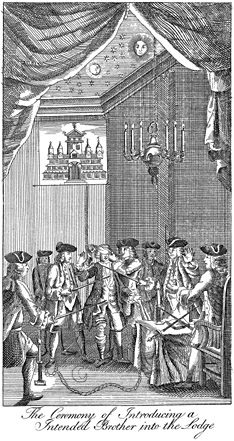
Swords did sometimes play an important part in the early Initiation ceremony; a 1762 Masonic Exposure describes how the Initiate when restored to light was surrounded by a circle of Brethren with ‘their swords drawn in their hands, the points of which are presented to his breast’.
Swords in Freemasonry continued - This practice still continues in some English workings, such as at Bristol, and under some other Constitutions.

Swords in Freemasonry continued - The Tylers of private lodge have always carried drawn swords, which should never be sheathed whilst the lodge is open; we also have accounts of Masonic funerals for Tylers where their swords were broken in two and cast into the grave.
Although there have been exceptions; when members of the Lodge Jamrud No.4372 met whilst on active service during the1935 Mohforce campaign in NW India, their Tyler was armed not with a sword but with a revolver and a bayonet.
Strangely today’s Grand Tylers do not carry swords, nor do they guard the lodge door; at Grand Lodge meetings a ‘Sword of State’ is carried into the lodge by the Grand Sword Bearer, but it is purely ceremonial and always kept in its scabbard. Today’s Inner Guards are usually armed with a small dagger called a poniard (‘poignard’ in French); but the early records do speak of them having swords or pointed trowels, and their collar jewel is still a pair of crossed swords.
Swords in Freemasonry continued - Tylers’ swords are often military or naval swords, sometimes donated by lodge members who had served in the armed forces. The swords are of many different sizes and shapes, including cutlasses; some extraordinary ‘wavy blade’ swords were also especially made for lodges, but more about them later.
In the past Tylers used their swords not only to guard the lodge door, but also to protect the Brethren when in public spaces; so unlike many other ritual items their swords are not stylised tokens but actual swords. Today in a few old lodges the Master before opening the lodge will still call the Tyler in to check the sharpness of his sword; the 1843 accounts for the Lodge of Relief No.42 in Bury record the payment of 2s 6d to a Bro. Warburton for sharpening a sword.

Swords in Freemasonry continued - Saluting with a sword is a military practice that is sometimes copied by Tylers as they leave the lodge after being invested; whilst it is a delight to see such salutes performed with great flourish, it can be rather risky if you are standing too close! However, when the Tyler is giving Masonic salutes he must always transfer his sword to the other hand and keep its blade pointed towards the ground.

Swords in Freemasonry continued - In the past some Tylers have used what are known as ‘wavy blade’ or ‘flaming’ swords.
Some lodges still have such swords; the Constitutional Lodge No.294 in Beverley has an unusual 3' 8" long ‘flaming’ sword that they purchased in 1796 for just 4 shillings, and the Inner Guard of the Philanthropic Lodge No.107 in King’s Lynn still uses a dagger sized version.
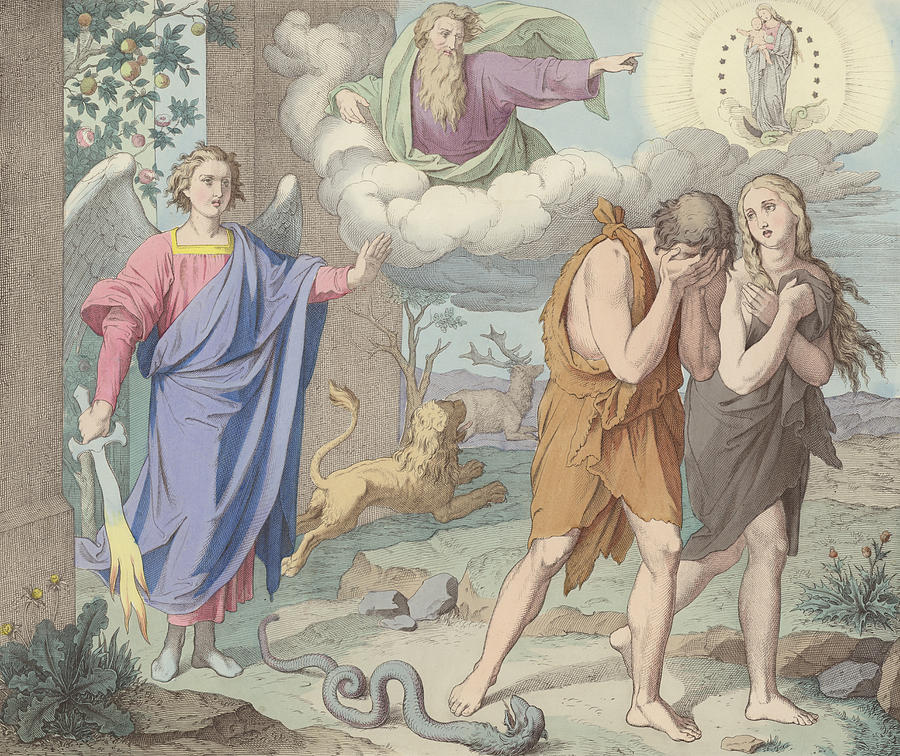
Such swords would not have made effective weapons, but are believed to symbolise the ‘flaming sword’ from the Book of Genesis 3:24. This describes how God drove Adam and Eve out of the Garden of Eden, and placed Cherubims at the garden’s entrance to guard it with ‘a flaming sword which turned every way, to keep the way of the tree of life’; a literal translation from the Hebrew would be ’flame of the whirling sword’.
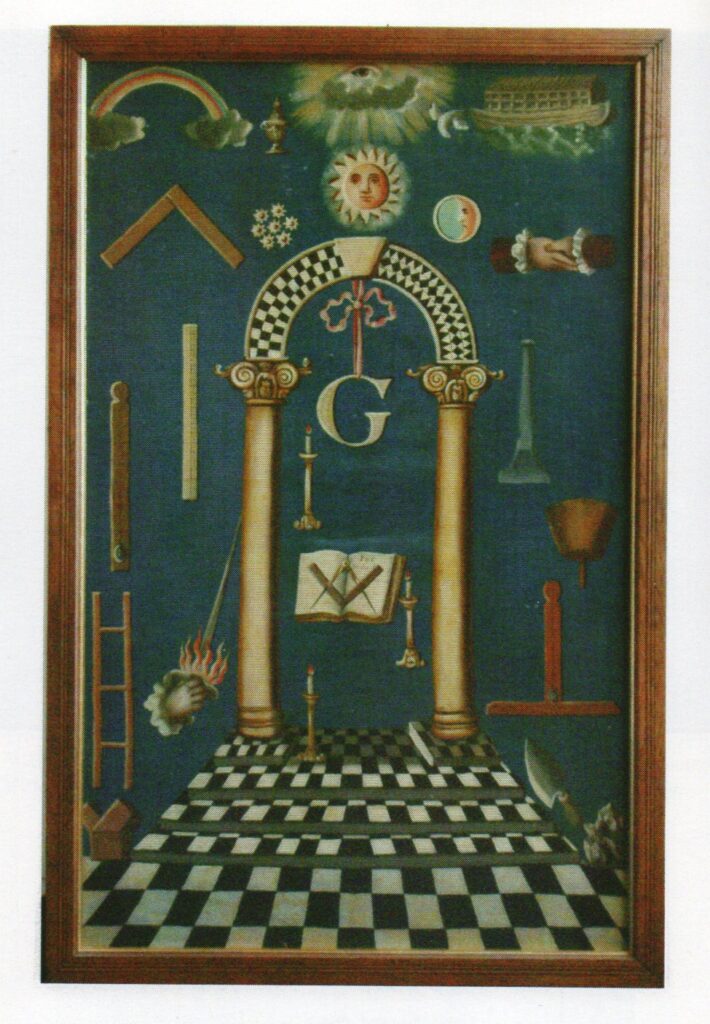
Swords in Freemasonry continued - In our lodge rooms swords have been variously depicted on aprons, floor cloths, and tracing boards. They are often shown pointing at a heart; less commonly they are held by a hand emerging from a cloud, or laid across an open Book of Constitutions to remind us that we should guard our actions in accordance with that book’s rulings. Depictions of ‘flaming swords’ first appear in the late 18th century; where they are shown as either as a sword with a ‘wavy’ blade, or with actual flames.

This Swords in Freemasonry post has been created by the West Kent Military lodge for information. If you would like to now more about the Lodge contact us here

If you’d like to know more about us or how to join our Military Lodge simply click the contact us link and message us your details. We will be very happy to answer any enquiries you may have.

Twitter Feed


