
Impressive - Standing on the shoulders of Giants

Standing on the shoulders of Giants
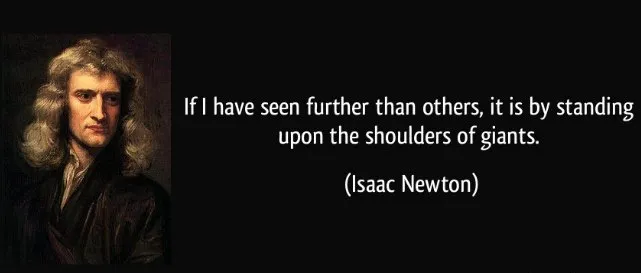
Standing on the shoulders of Giants Part 1 - so where does the saying come from?
So our giant is from entry No.458 in the Beauchamp Lodge Register. His name is Harold Williams and he is a Lieutenant General, a Companion of the Order of the Bath and a Commander of the Order of the British Empire. Bro. Harold Williams joined Beauchamp Lodge in India on the 2nd August 1921 from his Mother Lodge, which was the Light-in-Arabia Lodge No. 3870.
Standing on the shoulders of giants continued - Lt. General Sir Harold Williams KBE CB was a very distinguished army officer, a respected engineer, and an eminent Freemason; yet he still found time to help start a children’s charity, climb mountains, and write a book about bird-watching in India.
Born in Ireland in 1897 he joined the army when he was 18. In 1936 he was appointed to the staff at the Roorkee Engineering College, where in 1945 he was made Commandant of the School of Military Engineering. After Indian independence he would remain in the Indian Army as its Engineer in Chief; and he put his many skills to good use surveying and constructing new access roads into the Himalayas, an area he frequently visited to climb and birdwatch.
Standing on the shoulders of giants continued - Bro. Williams gave a lifetime of service to Freemasonry in India. A Past Grand Warden of Grand Lodge, and a Past Deputy Grand Master of Bengal; he helped prepare the way for creating the Grand Lodge of India, and was President of its first Board of General Purposes. He first visited the Beauchamp Lodge in 1921, and joined it that same year; he was Master of the lodge twice, and was instrumental in its move to Calcutta.
Harold Williams was described as a great character, very likeable, with a stature and calm bearing that commanded attention. He died in 1971 and was buried at Roorkee with full military honours, in sight of his beloved Himalayan Mountains.
Obituary - Standing on the shoulders of giants - Lt. Gen Harold Williams
Standing on the shoulders of giants continued - In 1917 he was commissioned into the Royal Engineers and posted to India, where he joined the 51st (Field) Company Bengal Sappers and Miners. then forming part of the Aden Field Force. He remained in Aden with his Unit until 1921, after which he spent three years in Roorkee, first as Company Officer and finally as Assistant Adjutant and Quartermaster, Bengal Sappers and Miners. He then returned home to take a supplementary engineering course at Cambridge, also studying at the School of Military Engineering, Chatham. After a short posting to the Royal Engineer Mounted Depot at Aldershot, he left for India in 1927.
Back again in Roorkee he took command of A (Depot) Company, Bengal Sappers and Miners, later commanded B Company and finally became Corps Adjutant. Posted in 1933 as an Instructor to the Indian Military Academy, Dehra Dun, he became three years later a Senior Instructor at Thomason Civil Engineering College (later the University of Roorkee) where he continued until 1938.
Standing on the shoulders of giants continued - Shortly before the outbreak of World War II Williams was appointed a First Grade Staff Officer at Army HQ, Delhi, but was soon posted to the home establishment to become Commander Royal Engineers, 1st Armoured Division. With this Division he went to France in 1940 and after the German breakthrough joined up with the 51st Highland Division: he was amongst those who escaped capture and were evacuated from Le Havre.
In January, 1942, he paid a fleeting visit to Roorkee, where his complete Orderly Room Staff of ten years before was assembled to greet him. From 1943/44 he was Chief Engineer. IV Corps, serving in Assam and during the desperate fighting in Upper Burma, when he was mentioned in dispatches. In 1945 he was appointed Commandant at the School of Military Engineering, Roorkee.
Standing on the shoulders of giants continued - Following Partition and the withdrawal of all British forces from India and Pakistan in 1948, the Governments of both countries asked for a number of Royal Engineers officers to stay behind to help establish their respective Engineer Corps - one officer in each case to hold the position of Engineer-in-Chief. Williams was chosen by the Indian Government for this post, and so continued until he retired in 1956 with the rank of Lt. General, Indian Army. During this period he led an Indian Engineer Himalayan expedition up Mt Kamet, which in June, 1952, all but reached the summit (25,447 ft). From 1951-58 he was Colonel Commandant, Indian Engineers.
He was active in the field of engineering research, and after becoming in 1955 Director of the Central Building Research Institute, Roorkee, gave particular attention to the study of lighting, heating, ventilation and acoustics. He did all he could to further the research. From 1962-65 he was Engineering Adviser to the Council of Scientific and Industrial Research, India.
For his services to India he was made a CBE in 1946, a CB in 1953 and received a knighthood in 1956.
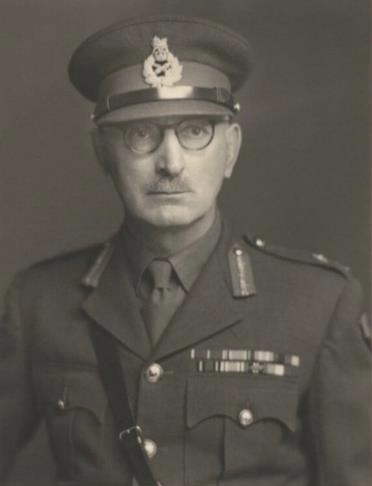

Standing on the shoulders of giants continued - A man of wide interests and tireless energy, Lt. General Sir Harold Williams was President for a time of the Institute of Engineers, India, a Founder Member and President of the Institute of Surveyors, India, and also President of the Institution of Military Engineers, India. From 1951-54 and again from 1958-61 he represented India and Pakistan on the Council, and during his annual visits home would attend the Institution’s Conversaziones. He was a member of the Fortescue Committee which reported on the need for an engineering university at Roorkee.
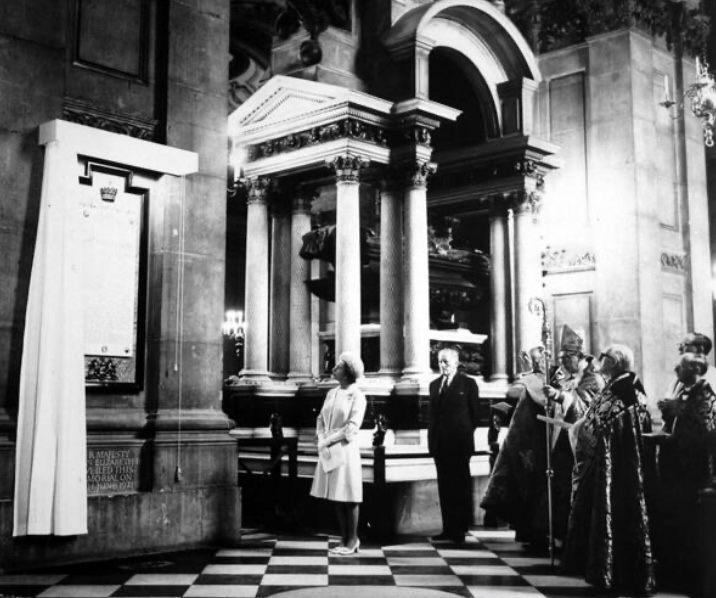
Immensely likeable and of great character, Sir Harold had an impressive manner: his stature and calm bearing impelled attention and it was by sheer personality rather than direct exertion of authority that he got things done: his own enthusiasm rubbed off on those who worked for him and his convictions became theirs. The army was his passion, and after his retirement he kept in close touch, regularly attending Service AGM’s, Dinners and at Homes. He was at St Paul’s when HM The Queen unveiled the Memorial to the Indian Army.
Standing on the shoulders of giants continued - Surprisingly he was a keen ornithologist, wrote a remarkable book on bird-watching and was the mainstay of Delhi‘s bird-watching society. At a different level, he was a founder-member of the Federation for the Welfare of Mentally Retarded Children in India. It is inevitable that his loss should be deeply felt-and fitting that he should have been buried with full military honours at Roorkee, the ‘spiritual home’ to which in his lifetime he so often returned.
For his services to India he was made a CBE in 1946, a CB in 1953 and received a knighthood in 1956.
Elected to corporate membership in 1945, he was transferred to the Senior grade in 1948.
Standing on the shoulders of giants continued - He was unmarried and was survived by his niece.
This Standing on the shoulders of giants post has been created by the West Kent Military lodge for information. If you would like to now more about the Lodge contact us here

If you’d like to know more about us or how to join our Military Lodge simply click the contact us link and message us your details. We will be very happy to answer any enquiries you may have.

Twitter Feed


