Freemasonry in Roorkee

Today Roorkee is a busy university city, but originally it was just a group of mud huts on the banks of the Solani River. Only in the 1840s when work commenced on the Ganges Canal did Roorkee begin to develop into a major town, with industrial workshops and a civil engineering college. Today the Ganges, now Ganga Canal, still flows through the centre of Roorkee, with the two original brick built lions keeping sentinel on its embankments; and they are the two lions depicted on the Beauchamp Lodge banner.
Roorkee became an important administrative centre and transport hub, indeed it was a terminus on India’s first railway. It also had a large military depot; many regiments were temporarily stationed there, and in 1853 the Bengal Sappers made it their permanent home. Army engineers were also on the staff of the Thomason Engineering College in Roorkee, which was housed in a very impressive classical style building. All the Sappers stationed at Roorkee were required to attend the college; but they were still serving soldiers, in 1848 all the college’s military students were ‘march[ed] to the frontier’ to fight in the 2nd Punjab War.

The military units based at or passing through Roorkee would have had Freemasons in their ranks, and many of the staff at the engineering college were also Freemasons. However, the nearest permanent lodge for them to visit was over 30 miles away; so clearly a Masonic meeting place was needed in Roorkee for both the resident and visiting Brethren. The Beauchamp Lodge would provide that venue; and of its 23 founding members, eleven came from the Royal Engineers, six from the 109th Regiment of Foot then stationed in Roorkee, plus six other Brethren.
They purchased a bungalow set in its own grounds to be their Masonic Hall; it had a thatched roof and a wide veranda running along each side, but this was progressively bricked in to increase the size of the core building. To fund the bungalow’s purchase and refurbishment the lodge sold shares to its members; and extra funds were raised by selling fruit from the trees that grew around the bungalow, Roorkee is still known today for its mango and guava orchards, sadly Wilmington is not!
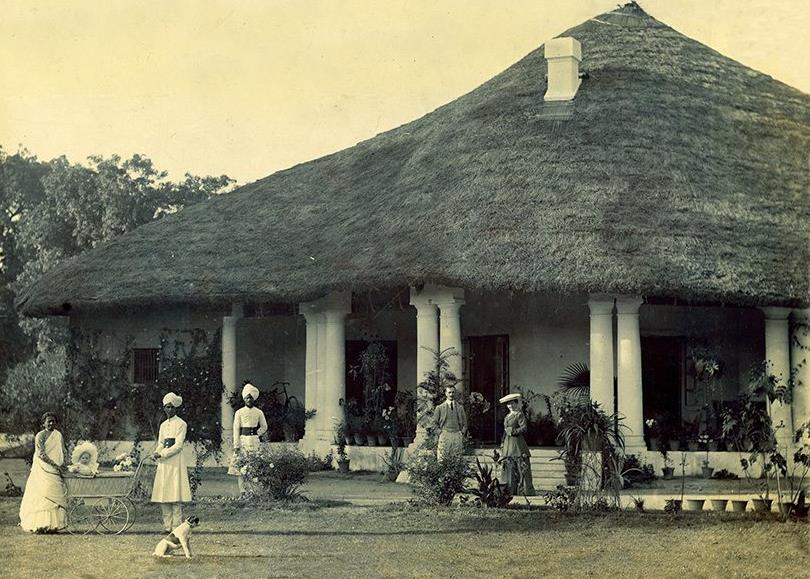
The lodge appointed a Superintendent of Works to oversee the refurbishment work, a rare active office in a private lodge; the improvements made included putting in a black and white marble floor and a marble dais. The finished temple was described as both ‘beautiful and practical’; the lodge’s first historian called it a ‘Jhadughor’, the Bengali word for a museum it literally means a ‘magic room’.
The Beauchamp lodge first met on the 2nd April 1872; the minutes tell us that ’pursuant to a warrant issued by the District Grand Master’ the meeting was held to install the lodge’s first Master & Wardens. It is not referred to as a consecration meeting, but it was when the Lodge was consecrated, even though its warrant from London is dated the 2nd November that year. At that time it could take many weeks for warrants to reach overseas lodges, and we have records of other Indian lodges being consecrated prior to their warrant date; Beauchamp Lodge did not receive its warrant from the Grand Lodge in London until February 1873.

If you’d like to know more about us or how to join our Military Lodge simply click the contact us link and message us your details. We will be very happy to answer any enquiries you may have.

History of Beauchamp Lodge
News & Information
Twitter Feed


